ResourcesPartnersSensorsPricingSavings CalculatorInvestorsDashboard Login
All Solutions
Specialty

Temperature Buffer

Glycol-buffered sensors that mimic real food temps, cutting false alarms from door openings and defrost cycles.

Mimics real food temps, reducing false alarms from door openings and defrost cycles. Audit-ready, zero complexity.

Fewer false alarmsNo cost
ConnectedFresh temperature buffer analysis for food safety compliance
90%
Reduction in false temperature alarms
$0
Additional cost over standard sensors
Sensors Used

Temperature Buffers for Smarter Food Safety

When it comes to cold storage monitoring, air temperature is not enough. Food warms and cools much more slowly than the surrounding air - which is why the CDC recommends using temperature buffers to reflect real product conditions inside fridges and freezers.

What is a Temperature Buffer?

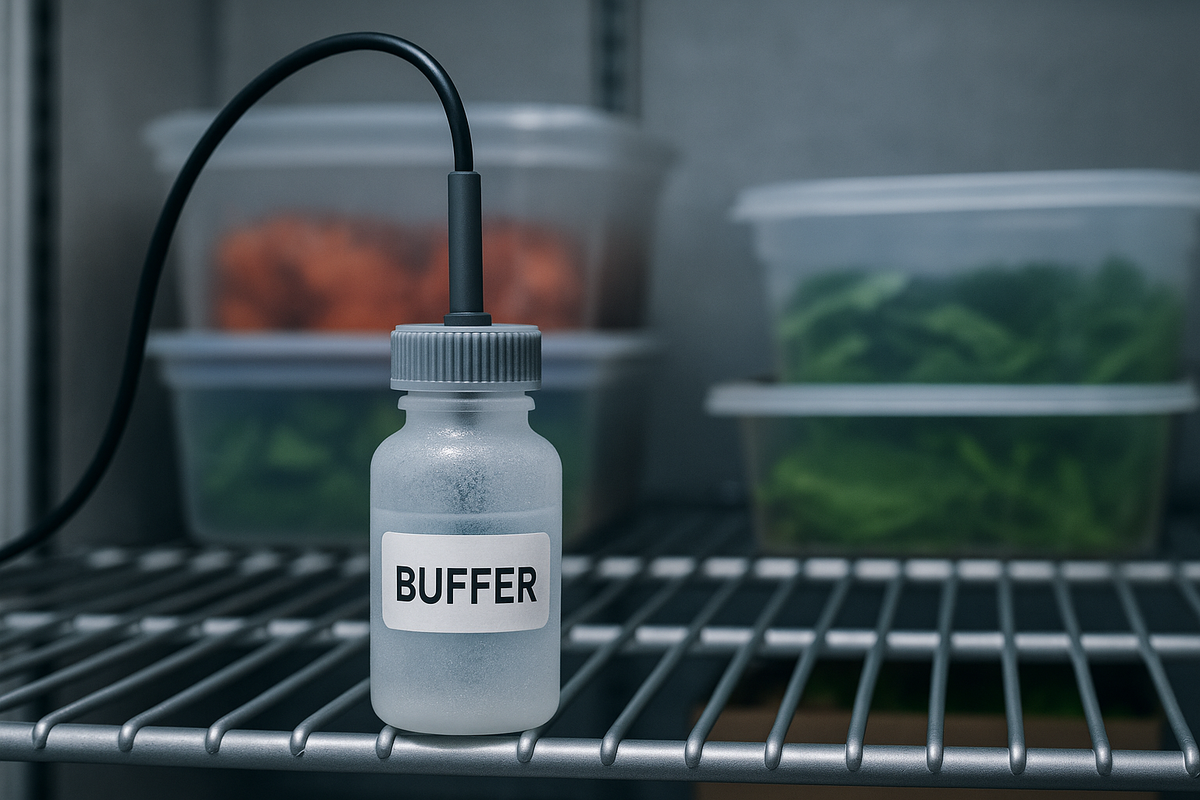
A temperature buffer is a small container - typically filled with glycol or glass beads - that houses the probe of a digital sensor. It slows the sensor’s response time so it mirrors how actual food behaves, rather than reacting to short-term changes in air temperature.

Why Use Them?

  • CDC Guidance - The CDC’s Vaccine Storage and Handling Toolkit recommends placing temperature probes in glycol-filled buffers to better represent actual product temperatures.
  • Fewer False Alarms - Brief spikes from door openings or fans no longer trigger unnecessary alerts.
  • Audit-Ready Records - Temperature logs more accurately reflect food temperatures, helping ensure compliance.
  • Improved Risk Management - Alerts are triggered by what matters - actual risk to food safety, not ambient airflow.

Glycol vs. Glass Beads

Both options are widely accepted in food safety and healthcare:

  • Glycol is the CDC-preferred standard for temperature buffering due to its consistent thermal performance.
  • Glass beads are a durable, low-maintenance alternative that avoids liquid handling and evaporation issues.

Choose the medium that fits your environment, regulatory needs, and maintenance preferences.

How to Use Buffers with ConnectedFresh

ConnectedFresh sensors are designed for easy integration with temperature buffers:

  1. Use the included wired temperature probe on your ConnectedFresh sensor.
  2. Insert the probe into a glycol or glass bead buffer vial - available as an optional add-on.
  3. Mount the sensor in your walk-in, reach-in, or freezer - and you're done.

No additional configuration or software changes are required. Your dashboard will automatically reflect stabilized readings.

Real-World Accuracy - Without the Noise

Temperature buffers aren’t just an upgrade - they’re an industry best practice. With ConnectedFresh, they’re easy to add, fully compatible, and come with no recurring cost.

Real food doesn’t fluctuate with the air. Neither should your sensor data.

Related Solutions

Automated Temperature Logging

Automated data logging, instant alerts, and actionable insights across every cooler, freezer, and prep area.

Learn more

Automated Cool Down Logs

Monitors every chill-down, triggers alerts if temps stall, and auto-generates compliance-ready logs.

Learn more

Temperature Calibration

Pre-calibrated, certified sensors with recalibration alerts, drift detection, and tamper-proof audit logs.

Learn more

Ready to see it in action?

15 minutes. That's all it takes to see it live. No decks, no pitch — just the product.

Book a Demo

Sleep better tonight.

Your coolers, your doors, your equipment - monitored 24/7. If something goes wrong, you'll know before it costs you.

Book a DemoDownload Overview
Ask us anything